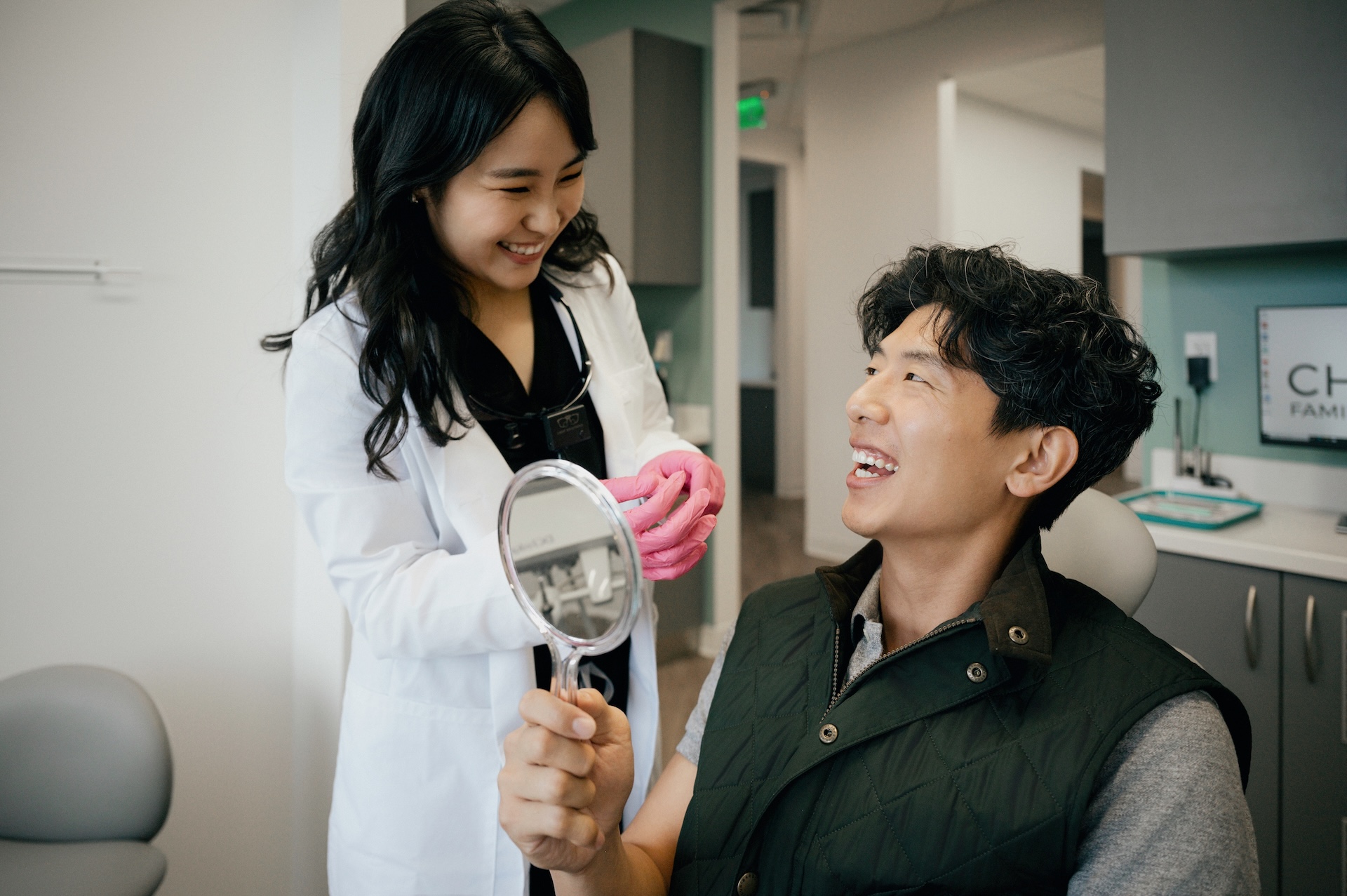
Modern dental technology isn't about adding more gadgets to the treatment room. It's about making your care more accurate, more comfortable, and easier to understand. From digital scans that replace messy impressions to advanced imaging that helps catch problems earlier, today's technology allows for more precise diagnoses and more predictable treatment.
At Chosen Family Dentistry in Rockville, we invest in technology because it improves the experience for our patients, not because it's the latest trend. This guide explains the tools we use, how they support everything from routine checkups to complex treatment, and why the technology behind your care matters just as much as the expertise guiding it.
Continue reading to learn how modern dentistry is changing the patient experience and what those advances mean for your oral health.
It's a broad phrase, so it helps to break it into the jobs the technology actually does. Most of what people mean by "modern" or "digital" dentistry falls into a handful of categories:
The thread running through all of it is simple: see more, guess less, and explain it clearly. A practice can own every gadget on the market, but the point is whether those tools help your dentist catch a problem sooner and talk you through it in plain language. That's the lens we use when we decide what belongs in our operatories. If you're looking for a family dentist in Rockville, MD who puts that technology to work, our team at Chosen Family Dentistry is happy to walk you through what we use and why.
Not every new device is a meaningful upgrade, so it's worth knowing where digital genuinely changes things and where the difference is mostly comfort.
Where it genuinely matters:
Where the difference is real but smaller:
Traditional methods aren't bad dentistry. Film X-rays and putty impressions served people well for decades. The honest takeaway is that digital tools raise the floor: they make accuracy easier to reach, mistakes easier to avoid, and the whole visit easier to understand. That's why our Rockville practice has leaned into them.
If you've been putting off care and want to see this technology in action, the Chosen Family Dentistry team is happy to walk you through what we find, step by step. You can reach our office at (240) 482-8548 to ask questions or schedule a visit.
Diagnosis is only as good as what your dentist can see, and modern imaging gives our team a more detailed view of your teeth and the structures around them. Dental X-rays are recommended when clinically appropriate, so you can feel confident that imaging is being used when it provides meaningful information for your care. At our Rockville dental office, digital imaging is an important part of how we care for people of all ages.
DEXIS technology allows us to capture and review detailed digital images of your teeth and surrounding structures. Digital images can be viewed on a screen, enlarged, and adjusted to help our team evaluate areas that may not be easy to see during a visual examination alone.
These images can also make it easier for us to explain what we're seeing and help you better understand your oral health and treatment options.
Digital X-rays provide detailed 2D images of your teeth and supporting structures using a digital sensor rather than traditional film. Images are available quickly and can be enlarged or adjusted to help us evaluate areas such as the spaces between teeth, tooth roots, and surrounding bone.
A standard X-ray provides a two-dimensional view, while cone beam CT captures detailed 3D images of the teeth, jawbone, nerve pathways, and surrounding structures. This additional information can be especially useful when planning procedures such as dental implants, evaluating tooth roots, or assessing the bone before treatment.
The iTero digital scanner gives us a detailed 3D view of your teeth without relying on traditional physical impressions. The scanner captures images of the mouth and creates a digital model that can be used for treatment planning.
iTero scanning can be particularly useful for services such as Invisalign and restorative or cosmetic treatments where an accurate representation of your teeth helps us plan the final result.
We pair our cone beam imaging with DTX Studio AI software, which adds another layer to how scan data is organized and reviewed. It doesn't replace our clinical judgment. Instead, AI serves as an additional review tool that may help highlight findings for the dentist to evaluate.
For you, the goal is simple: better information can support more precise planning and clearer conversations about what's happening with your oral health and what treatment options may be available.
If the memory of biting down on a tray of thick, chalky putty has kept you from booking, you're far from alone. Traditional impressions are one of the most commonly cited reasons people dread the dentist, especially anyone with a sensitive gag reflex.
An intraoral scanner does the same job differently. A small handheld wand moves slowly around your mouth, capturing thousands of data points per second and building a precise 3D digital model of your teeth and gums in real time. No trays, no putty, no holding your breath. Most people find it surprisingly unremarkable, which is exactly the point.
The benefits go past comfort:
That last point matters more than most people realize. When you can place two scans side by side, a slow change that might otherwise go unnoticed becomes obvious. For families who want care that follows them over years rather than a different dentist every few visits, that digital baseline is genuinely useful. It's one of the reasons patients choose Chosen Family Dentistry in Rockville for care that grows with their family.
A lot of dental fear comes from past experiences that were uncomfortable, rushed, or shaming. Some of what makes a visit easier now is technology, and some of it is simply how the room is run.
On the technology side:
For deeper anxiety, many practices also offer sedation options, ranging from nitrous oxide (laughing gas) to oral sedation that helps you stay calm and relaxed through a longer appointment. Sedation is something to discuss directly with your dentist, since the right choice depends on your health history and how much support you need. Beyond any of that, the thing that helps most isn't a device at all. It's being treated like a person, without a lecture about the gap since your last visit.
Modern tools aren't a separate service. They run underneath the treatments you actually come in for.
Across all of it, the technology does the same quiet work: it lets us plan carefully, show you the plan, and reduce the surprises that make dental work stressful.
Bringing kids to the dentist goes a lot smoother when the experience itself isn't scary, and the right tools help a child feel comfortable, calm, and even a little proud of their visit. At our family dental practice in Rockville, that comfort starts the moment they walk in.
None of this replaces a patient, gentle team, but it removes a lot of the friction that makes children dread coming back. Early visits that feel easy are how healthy habits take root, so a child who isn't scared at five tends to be a teenager who actually keeps appointments.
Cost and comfort aside, the question we hear most about imaging is whether it's safe, especially for children. It's a fair thing to ask.
A few things worth knowing in plain terms:
If you ever want to know why a particular X-ray is being recommended, that is understandable, and you'll get a straight answer. Care decisions about imaging should be a conversation, not something handed down.
For a lot of people, the gap between visits isn't laziness. A parent gets sick, benefits run out, anxiety builds, and suddenly it's been ten years. If that's you, you're not alone, and you're not starting from a worse spot than you think.
Modern imaging helps here in a specific way: it gives you a complete, accurate picture from day one instead of guesswork about what years away may have changed. Seeing your own scans on the screen makes that first conversation easier, but the bigger advantage is the baseline it creates. Once everything is captured in your digital record, every future visit has something to measure against, so it becomes straightforward to track what's actually changing and what's holding steady. After a long gap, that clarity replaces a lot of dread with a plan you can follow.
Just as importantly, the people in the room set the tone. We're used to welcoming folks who haven't been in for a while, and that conversation starts with where you want to go, not where you've been. If you're ready to take that step, our team at Chosen Family Dentistry in Rockville is here to help.
The most advanced technology is only as valuable as the clinician interpreting the information it provides. A 3D scan, digital X-ray, or AI-assisted image doesn't make decisions on its own. Our team's experience, judgment, and ongoing education are what turn those tools into better patient care.
That's why continuing education is such an important part of how we practice at Chosen Family Dentistry. Dr. Cho graduated with honors from the University of Maryland School of Dentistry before completing an Advanced Education in General Dentistry residency at her alma mater. She has served as a faculty member teaching dental students since 2016 and continues to pursue advanced training in digital dentistry and emerging technology.
Dr. Ajayi shares that same commitment to lifelong learning, continually expanding her clinical knowledge to stay current with modern techniques, technologies, and evidence-based care. Together, our doctors believe that investing in education is just as important as investing in equipment, because patients deserve both advanced technology and providers who know how to use it thoughtfully.
When you're choosing a family dentist in Rockville, those two things go hand in hand. Modern tools make remarkable care possible, but it's the knowledge, experience, and judgment behind them that make the biggest difference in your long-term oral health.
Cost is an important consideration, and dental insurance may cover less than some people expect. It's reasonable to wonder whether advanced technology also means a higher overall cost.
A few honest points:
The value of modern technology isn't really about the gadgets themselves. It's about having better information to work with, which can help us diagnose more accurately, plan more precisely, and give you a clearer understanding of your care.
The best dental technology isn't something you notice because it's impressive. You notice it because your visit feels smoother, your treatment makes more sense, and you leave feeling confident that your care is built on clear, accurate information. Whether it's a digital scan that replaces messy impressions or advanced imaging that catches concerns earlier, every tool has the same purpose: helping you receive better, more personalized care.
At Chosen Family Dentistry, technology is just one part of the experience. We combine modern diagnostic tools with a relationship-centered approach, taking the time to explain what we see, answer your questions, and help you make informed decisions without pressure. Whether you're bringing your child in for a first visit, catching up after time away, or planning more advanced treatment, we're here to meet you where you are.
If you're looking for a dental home in Rockville that combines advanced technology with compassionate, comprehensive care, we'd love to welcome you. Call us at (240) 482-8548 or schedule your visit and experience a more comfortable, connected approach to dentistry.
We can’t wait to meet you.
Call 240-482-8548 or request an appointment online to set up your first visit. We’ll be in touch soon.

